
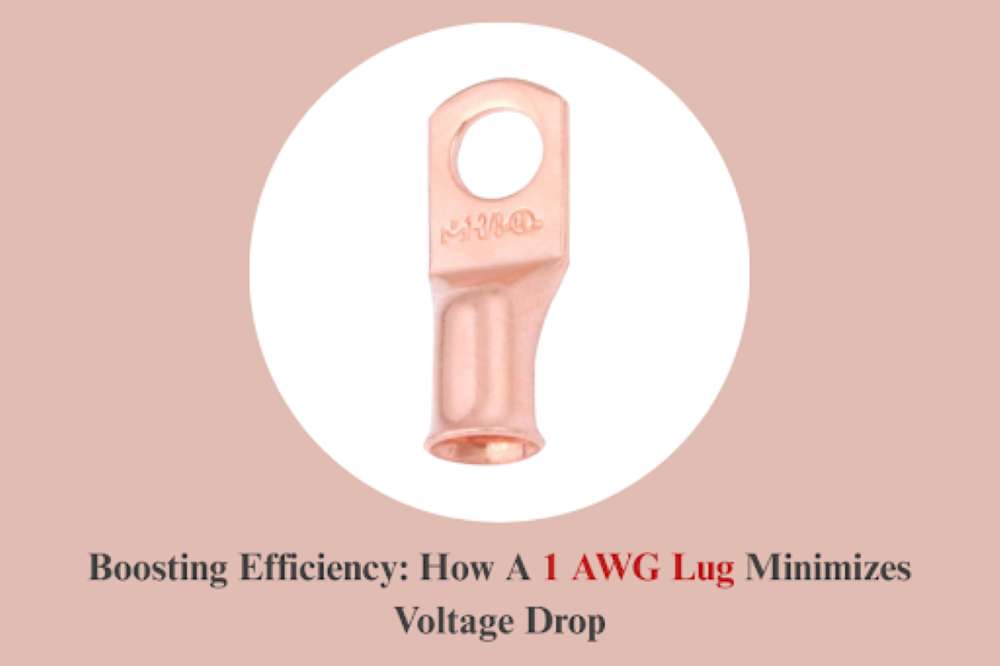
When you’re working with high-demand electrical systems, every connection point influences how well the setup performs. Power delivery isn’t only about cable size or battery capacity. The quality of your terminals plays a major role too. That’s why choosing the right 1 AWG lug matters more than people think. A properly sized and well-installed lug helps minimize voltage drop, improves system stability, and keeps your components safe under load.
For applications where current is heavy and reliability can’t be compromised, like automotive systems, marine setups, inverters, solar banks, or RV power, AWG cable lugs offer the strength and conductivity these systems need. Let’s break down how the right lug reduces voltage loss and why an upgrade is worth considering.
Why Voltage Drop Happens In The First Place
Voltage drop occurs when electrical energy loses potential along the path of a circuit. While cable thickness plays a large role, the connection point between cable and terminal is often overlooked.
A connection can lose efficiency for a few reasons:
- The lug isn’t sized correctly.
- The crimp is weak or uneven.
- The material isn’t conductive enough.
- The surface area touching the stud is small.
- Corrosion increases resistance over time.
The goal is simple: reduce resistance at every point. A 1 AWG lug helps you do exactly that.
How A 1 AWG Lug Helps Minimize Voltage Drop
A high-quality 1 AWG lug improves electrical efficiency through a mix of material quality, design, and proper contact area. Here’s how it works in real-world setups:
1. More Copper Means Lower Resistance
A larger lug made for 1 AWG cable offers a thicker copper wall and greater metal mass. This allows electricity to pass through with less resistance. That difference becomes noticeable when transmitting high current.
2. Better Surface Contact For Stronger Power Flow
A lug with the right barrel size fits tightly around the cable strands. Combine that with a flat, wide stud hole surface, and you get more physical contact area. More contact = less heat and less voltage drop.
3. Secure Crimping Prevents Micro-Gaps
When a lug is sized correctly, the crimp compresses every strand evenly. A mismatched lug leaves tiny gaps that create resistance, heat, and eventual failure.
A 1 AWG cable lug ensures a uniform crimp that stays solid even under heavy vibration, such as in off-road vehicles or marine engines.
4. Optimal Current Handling
1 AWG conductors typically carry 130–150 amps depending on the setup. A lug that’s designed for this exact gauge ensures the terminal can handle peak loads without bottlenecking the system.
5. Reduced Heat Build-Up
Lower resistance means less heat. Less heat means your wires and components last longer and operate more efficiently. In high-draw systems, this difference is huge.
Where 1 AWG Lugs Make The Biggest Impact
These lugs show their value in systems where efficiency and reliability can’t be compromised:
- Car audio power runs (especially high-wattage amplifiers)
- Solar battery banks and inverters
- Marine and boating electrical systems
- Car modification and performance vehicles
- Backup power systems and generators
- Off-grid setups
If a system pushes high current or has long wire runs, minimizing voltage drop becomes a priority. A proper lug helps maintain performance from end to end.
Common Installation Mistakes That Increase Voltage Drop
Even with the right lug, installation errors can undo everything. Here are the issues to avoid:
1. Using The Wrong Lug Size
Some installers try to “make it work” with a slightly bigger or smaller lug. That leads to weak crimps, loose strands, and resistance buildup.
2. Poor Crimping Tools
A hammer crimp or plier-style tool won’t give a clean, even compression. A proper hex or hydraulic crimper is always recommended for 1 AWG.
3. Skipping Heat Shrink
Heat shrink protects the connection from moisture and vibration. Without it, corrosion or wire fatigue increases over time.
4. Not Cleaning Contact Surfaces
Even a thin layer of dirt or oxidation raises resistance. Clean metal-to-metal contact is essential.
5. Allowing Strain On The Connection
Heavy cables must be supported. If the lug is carrying all the weight, mechanical stress weakens the connection.
Signs Your Lug Is Causing Voltage Loss
You may need to inspect or replace your lug if you notice:
- Amplifiers shutting off under load
- Dim lights or inconsistent power
- Overheating near the terminal
- A voltage drop greater than expected on long runs
- Cracked or loose insulation around the lug
A fresh, high-quality 1 AWG lug easily eliminates these issues.
Why Choosing The Right Brand Matters
Not all lugs are created equal. Look for:
- Oxygen-free, high-conductivity copper
- Smooth barrel interior for clean crimps
- Solid one-piece construction
- Clearly marked gauge size
- UL-listed or tested components
These features ensure the lug lasts years without losing conductivity.
Power Stability Begins With Quality 1 AWG Cable Lugs
Voltage drop might seem like a small detail, but it affects everything from efficiency to safety. A well-made 1 AWG lug gives your system the solid connection it needs to deliver full power without unnecessary loss. When you combine the right lug size with good crimping and proper installation, your setup runs smoother, cooler, and far more reliably.
If you want dependable copper lugs designed for clean power flow, explore the collection of 1 AWG cable lugs at Selterm.